Three kinds of paper make up most of the work a process server does in Los Angeles: the summons that start a lawsuit, the subpoena that brings in a witness or a set of records, and the eviction papers that return a property to its owner. Each one has its own rulebook. Each one has its own deadline. And each one can fail in its own way.
A summons served late can stall a case past the court’s time limit. A subpoena served the wrong way gives a witness a lawful reason to stay home. An eviction notice delivered out of order can send a landlord back to the beginning, a month of rent poorer. Then there is the evasive defendant who does not answer the door at all, and the question of what a judge will accept as proof that you tried.
The right process server knows the differences between these documents and treats each one accordingly. The wrong one treats every job like a package drop.
We are The Global Process Server. Our company was founded by licensed private investigators, and our team has over 30 years of experience finding people and serving court documents in Los Angeles County, throughout California, in all 50 states, and in 195 nations. This guide walks through how service works for summonses, subpoenas, and evictions, how to choose a company, what it costs, and the questions people ask us most.
To start a server now, call 855-505-9155 or visit TheGlobalProcessServer.com.
A process server is the person who delivers legal papers to a party or witness in a manner the law accepts, and who then swears to the court that it was done.
Our legal system rests on a simple promise: nobody should lose money, property, or rights in court without first being told about the case and given a chance to answer. That promise is called due process. Service of process is how it is kept.
Service also gives the court jurisdiction. Until the defendant has been served, a judge generally has no authority to rule against that person or entity. So when service is missing or defective, everything built on top of it, including a default judgment, is at risk.
On a typical assignment, we:
Process servers serve far more than lawsuits. On any given day our team may deliver a summons and complaint, a deposition subpoena, a three-day notice, divorce papers, a child custody order, a restraining order, a small claims claim, a writ, or a simple demand letter that a client wants hand-delivered and documented.
Under California law, the server must be at least 18 years old and must not be a party to the action. That second rule surprises people. You cannot serve your own lawsuit. In addition, anyone who serves more than 10 papers a year for pay must be a registered process server in the county where they live or have their principal place of business, unless an exemption applies, such as the one for licensed private investigators and their employees.
The Code of Civil Procedure sets out several methods of service. Knowing which one fits is half the skill of the job.
Personal service means handing the papers directly to the person named. Under section 415.10, it is complete at the moment of delivery. This is the preferred method for a summons, because there is no waiting period and little room for argument.
When an individual cannot be reached in person after reasonable diligence, California law allows substitute service under section 415.20. A copy of the summons and complaint is left at the person’s home, usual place of business, or usual mailing address (other than a post office box) with a competent adult who is told what the papers are. A second copy is then mailed to the same address. Service is deemed complete on the tenth day after mailing.
For a business or other entity, the rule is a little different. The papers may be left during usual office hours at the office of the person to be served, with whoever appears to be in charge, followed by mailing a copy.
Section 415.30 allows a summons to be sent by mail along with a notice and acknowledgment of receipt. It is inexpensive, but it depends on cooperation. If the defendant does not sign and return the form, there is no service, and you need another way to serve.
If a defendant cannot be found despite a real search, the court may allow service by publication in a newspaper under section 415.50. In an unlawful detainer case, the court may allow posting on the premises and mailing under section 415.45. Both require a court order, and both depend on a written record showing the attempts to serve by ordinary means.
A corporation or LLC cannot be handed anything. It must be served through a person the law designates, most often its registered agent, known in California as the agent for service of process. More on that below.
Service outside California
A defendant in another state can generally be served by any method California allows, including certified mail with a return receipt. A defendant in another country may have to be served under an international treaty. Either way, the California rules still decide whether your court will accept it.

The summons is the document that tells a defendant they have been sued and how long they have to respond. It is always served with the complaint.
California Rules of Court, rule 3.110(b), generally requires that the complaint be served on all named defendants, and that proof of service be filed with the court, within 60 days after the complaint is filed. A judge can extend that time for good cause, but you have to ask. There is also an outer limit in the statutes: a summons and complaint must be served within three years of filing, or the case is subject to dismissal.
The defendant must be served with a copy of the summons, the complaint, and any other papers the court requires at the start of a case, such as a civil case cover sheet or notice of case assignment. Los Angeles Superior Court has its own local forms, and leaving one out can cause trouble later. We check the packet before it goes out.
A defendant served in California generally has 30 days to file a response. If service was by substitute service, the clock starts when service is deemed complete, ten days after the mailing. If no response is filed, the plaintiff can request entry of default. The court clerk will look closely at the proof of service before entering it.
Some defendants are simply never home. Others are hiding. Our approach is the same in both cases: vary the timing, confirm the address, document everything, and move to substitute service once the diligence standard is met. If the address is bad, our investigators run a skip trace to find a current one. If the person cannot be located at all, your attorney will have the record needed to ask for publication.
A subpoena is not a suggestion. It is a command, backed by the court, to appear and testify, to produce records, or both. But it only has force if it is properly issued and properly served.
People often speak of three types of subpoenas:
A civil subpoena for personal appearance is served by delivering a copy to the witness personally. The Code of Civil Procedure calls for service a reasonable time before the appearance date, so the witness can prepare and travel.
There is a trap here. A witness is entitled to ask for witness fees and mileage at the moment of service. If they ask and the fees are not offered, the witness may be excused from attending. The process server must arrive ready to tender them.
A subpoena for business records is directed to the custodian of records, or to another person qualified to certify the records. For an organization, service can generally be made on an officer, a director, the custodian, or an agent or employee authorized to accept it. Large companies, banks, and hospitals often have a specific office or address for subpoenas. Delivering it to the wrong desk can push your production date back by weeks.
When a subpoena asks for a consumer’s personal records, such as bank, medical, or phone records, or for an employee’s employment records, sections 1985.3 and 1985.6 add a step. The person whose records are sought must first be served with a copy of the subpoena and a notice explaining their right to object. Only after that, and within specific time limits, may the custodian be served. Reverse the order and the subpoena can be quashed.
We serve both parts in sequence and return a separate proof for each.
Out-of-state cases
If your case is pending in another state and the witness or records are in the Los Angeles area, the out-of-state subpoena has no force here on its own. It must be reissued as a California subpoena under the Interstate and International Depositions and Discovery Act, section 2029.100 and following.
We assist attorneys with that domestication step and then serve the California subpoena locally.
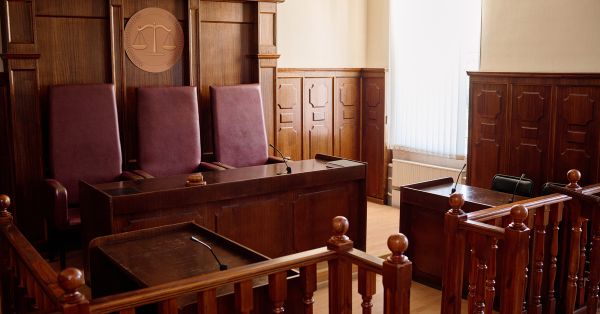
The eviction process in California moves quickly, and it is unforgiving. Tenant protections at the state level, in LA County, and in the City of Los Angeles add further requirements. A landlord who makes a service mistake often has to start again.
Before a lawsuit can be filed, the tenant must receive a written notice. Common examples are a notice to pay rent or quit, a notice to cure a lease violation or quit, and a notice terminating the tenancy.
Section 1162 of the Code of Civil Procedure provides three ways to deliver eviction notices:
The methods are meant to be tried in that order. A landlord who skips straight to posting, without any attempt at the first two, invites a challenge.
If the tenant does not comply, the landlord files an unlawful detainer action. The summons and complaint must be served by personal service or by substitute service after reasonable diligence. The tenant’s time to respond is short and is counted in court days. Because the legislature has adjusted it, confirm the current number with your attorney or the court.
When a tenant cannot be served after diligent effort, section 415.45 lets the landlord ask for an order to serve the detainer summons by posting it on the premises and mailing it by certified mail. The judge will want a declaration listing the dates and times of the attempts. Our attempt history is written with that declaration in mind.
Adults living in the unit who are not named on the lease or in the complaint can delay a lockout by coming forward late. A prejudgment claim of right to possession, served with the summons under section 415.46, addresses that. It must be served by a registered process server or a levying officer.
What a process server cannot do
A process server can serve the notice, the summons, and related papers. The physical lockout at the end of the case is carried out by the sheriff under a writ of possession. No private company can do that part.
The Global Process Server has provided fast, professional and affordable legal support to businesses and individuals on every continent for more than three decades. We serve legal documents of all types to 195 countries around the world according to Hague Service Convention, Letters Rogatory, Inter-American Treaty, as well as any other national or international requirements.
Click any nation below for more information about international process service.
As a party to the action, you are disqualified. That leaves three choices: a friend or relative, the sheriff, or a professional.
Any adult over the age of 18 who is not a party may serve. The question is whether they will do it correctly. A non-professional has to know which method applies, what to say, how to fill out the service form, and what to do when the door stays shut. If service is challenged, your friend becomes a witness. For a subpoena with a consumer notice or an eviction with tenant protections in play, the margin for error is thin.
The Los Angeles County Sheriff serves civil papers for a fee. It is a valid option. But deputies handle a heavy load, typically attempt service during limited hours, and do not investigate a bad address. If the attempts fail, the papers come back marked “not served,” and you have lost time you may not have.
Proper service of process is the foundation of the case. It is the wrong place to economize.
There are many process servers in Los Angeles. Here is how to compare them.
Ask for the county registration number of the individual who will serve your papers, or the state license number if the company operates under a private investigator license. Confirm it is current. Registration in California involves a background check and a bond, which gives you some protection if something goes wrong.
A company that guarantees every serve is not being straight with you. People move, leave the country, and hide. What you want is prompt, honest reporting: when each attempt was made, what was seen, and what the next step is.
Los Angeles County alone has 88 cities and a large unincorporated area. Cases also spill over county and state lines. Ask whether the company can handle service across the county, the state, the country, and abroad. Using 1 process server team for all of it means one point of contact, one standard of documentation, and no gaps when a defendant relocates.
Read online reviews for detail, not just stars. Look for comments about communication, accuracy, and difficult serves. Paid placements are ads, not endorsements. Ask whether law firms use the company regularly, since attorneys tend to drop vendors whose proofs cause problems.
Request a sample attempt log and a sample proof. The log should record the date, time, and service address of each visit, who was spoken to, and what was observed. Weak notes make a weak declaration of diligence.
Many clients need more than delivery. We offer legal support that includes skip tracing, court filing, public record research, subpoena domestication, service by publication, translation for international matters, and document retrieval. One vendor for all of it keeps a file from getting stuck between offices.
The figures here are general market ranges for California metro areas, offered for orientation only. They are not our rates. Actual fees depend on the document, the address, the deadline, and the difficulty. Call 855-505-9155 for a quote.
A routine serve, with a first attempt in a few business days and several attempts included, commonly runs between about $60 and $125 per address.
Priority handling often adds $40 to $100 or more. Same-day and after-hours service costs more still and can reach a few hundred dollars depending on distance.
Locating a person with a bad address is billed separately, often around $50 to $150 for a standard database search. Stakeouts are usually billed by the hour, commonly $75 to $150, sometimes with a minimum.
Ask how many attempts are included, whether the proof of service is included, and what happens if the address is wrong. A low price that covers one attempt is not cheaper than a fair price that covers four.
Summonses, subpoenas, and evictions are the bulk of the work, but not all of it.
In a divorce, the six-month waiting period before the marriage can be dissolved runs from the date the respondent is served or appears, not from the date of filing. The family law summons also carries automatic orders about property, insurance, and the children, which bind the respondent on service. In child custody and support matters, orders to show cause and requests for orders have their own notice periods. Restraining orders must be personally served before the hearing, by the deadline on the order. We serve all of these discreetly.
Small claims court is designed for people without lawyers. The claim can be served by certified mail sent by the court clerk, by the sheriff, by substitute service, or by a process server. Certified mail through the United States Postal Service is the cheapest route and the least reliable, because it only counts if the defendant personally signs for it. The claim must be served a set number of days before the hearing, and the number changes with the method and the defendant’s location. Check your form.
Section 416.10 lists who may accept a summons for a corporation: the designated agent for service of process, the president or chief executive officer, a vice president, a secretary or assistant secretary, a treasurer or chief financial officer, a general manager, or a person the corporation has authorized. We look up the registered agent with the California Secretary of State before we go out. LLCs and partnerships follow their own rules. Whatever the person or entity, the name on the caption has to match the party served.
A city, county, or public agency is served through its clerk, secretary, president, presiding officer, or other head of its governing body under section 416.50. Many claims against public entities also require a written claim before any legal action is filed.
Serving a prisoner is possible, but it does not work like an ordinary serve. Jails and prisons control access, and service on an inmate is generally arranged through the facility, often through the sheriff or a litigation coordinator. Procedures vary by institution, so we confirm them first.
Judgment enforcement
After judgment, writs of execution, bank levies, wage garnishments, and debtor examination orders each must be served on the right party. A registered process server may carry out several of these steps together with the levying officer.
The Hague Convention on the Service of Abroad of Judicial and Extrajudicial Documents in Civil or Commercial Matters is designed to simplify the process of servicing process to assure that defendants sued in foreign jurisdictions receive actual and timely notice of suit and to facilitate proper proof of service. For more information on the Page Convention please visit the following resources:
Please read our Terms of Service by clicking here.
Our international locations do NOT receive mail,
direct inquiries, or courier deliveries.
Please contact our main California office with all correspondence below:
Dial 855-505-9155 to speak with a representative.
Live chat is available at the lower right hand corner button.
The court was not at the door. It knows only what the proof says.
In California, the person who delivers the papers signs a proof of service under penalty of perjury. Other states call it an affidavit of service, and you will hear both terms used. For summons, the Judicial Council publishes a standard form. Subpoena forms include their own proof of service page.
A complete proof states the documents served, the name of the party served, the date, time, and address, the method, and the server’s name, address, and registration details. Substitute service requires the mailing information and a declaration of diligence. A subpoena proof should also show whether witness fees were offered or demanded.
The proof is filed with the court. For a summons, that filing is what allows a default to be entered if the defendant does not respond. For a subpoena, the proof is usually kept by the attorney and filed only if the witness fails to appear and enforcement is needed. Either way, an incomplete proof can undo an otherwise good serve.
Our Los Angeles process serving covers the whole county:
We serve at homes, offices, registered agent addresses, and other locations where service is permitted. From Los Angeles, our reach extends to every California county, every state, U.S. territories, tribal land, and 195 nations.
For a non-party witness in a civil case, yes, as a rule. The subpoena is served by delivering a copy to the witness personally. There are exceptions. A party to the case, or an officer, director, or managing agent of a party, can generally be required to attend trial through a written notice served on that party’s attorney instead of a subpoena. A subpoena for an organization’s business records can be served on its custodian or another authorized person. Criminal cases have their own rules. When in doubt, personal delivery is the safest course.
The sheriff will return the papers with a statement that service was not completed. Nothing further happens on its own. The landlord can then hire a registered process server to make new attempts, including at hours the sheriff does not work. If the tenant still cannot be served after diligent effort, the landlord can ask the court for an order to post and mail the summons under section 415.45. A detailed record of the failed attempts is required for that request.
Under the California Rules of Court, the complaint in most civil cases must be served on all named defendants within 60 days after it is filed. The court can extend that period on request. Separately, state statute sets an outer limit: a summons and complaint must be served within three years of filing, or the action is subject to mandatory dismissal. Some case types, including unlawful detainer and family law, follow different schedules. Local rules can add requirements too.
The server completes the proof of service section on the Judicial Council subpoena form, or an equivalent written declaration. It should state the date, time, place, and manner of service, the name of the person served, whether witness fees and mileage were tendered or demanded, and the server’s name, address, and registration information. It is signed under penalty of perjury. When a consumer or employee notice was required, there should be a separate proof showing that it was served first.
Generally, you have no legal duty to obey a subpoena that was never served on you. A phone call or an email saying “you are subpoenaed” is not service, unless you agree to accept it that way. There are two things to keep in mind. First, if you are a party to the case, a notice served on your attorney can require you to appear at trial. Second, if you agree to accept a subpoena informally or agree to appear on a different date, that agreement can be binding. If you have received something and are unsure what it is, ask a lawyer before you ignore it.
Several things can. Common ones include: improper service; too little time between service and the appearance or production date; failure to tender witness fees when the witness asks for them; failure to serve a required consumer or employee notice first; a subpoena that was not properly issued; a demand that is overbroad, seeks privileged material, or invades privacy without justification; and a subpoena to a witness who is beyond the reach of the court. A person who believes a subpoena is defective can ask the court to quash or limit it. That is a legal question for an attorney.
You should not simply ignore one. A person who disobeys a valid, properly served subpoena can be held in contempt of court and may face a civil penalty and liability for damages caused by the failure to appear. What you can do is object. The law allows a witness or a party to file a motion asking the court to quash or modify the subpoena, and certain objections to records subpoenas can be made in writing. The right response depends on the type of subpoena and the timing, so get legal advice quickly.
The traditional three are a subpoena for testimony (requiring a person to appear and testify), a subpoena duces tecum (requiring documents or other items), and a deposition subpoena (used in discovery before trial). California further divides deposition subpoenas into three kinds: testimony only, business records only, and testimony together with records.
It depends on the kind. A subpoena for a personal appearance must be served a reasonable time before the date, so the witness can prepare and travel. The statute does not give a number of days, and the more notice the better. A deposition subpoena for business records has specific timing rules that tie the production date to the dates of issuance and service. When a consumer or employee notice is required, that notice has its own lead time before the custodian is served and before production. Because these periods are technical, confirm them with your attorney and send the subpoena out for service as early as you can.
Yes. A person representing themselves can obtain a subpoena from the court clerk, who issues it signed and sealed, to be filled in before service. Small claims court has its own subpoena form. In a regular civil case, an attorney of record may also issue subpoenas directly. However you obtain it, it still has to be served correctly by someone other than you.
In most civil cases, rule 3.110 calls for the proof of service to be filed within the same 60 days after the complaint is filed in which service itself is due. For a cross-complaint, the period is generally 30 days. The court can extend the time on request. In practice, the proof should be filed as soon as service is complete, so there is no question about your deadlines and a default can be requested promptly if no response comes in.
Yes, and it usually helps. A landlord-tenant dispute, for example, may involve a notice, an unlawful detainer summons, and later a subpoena for records. A company that already knows the parties and the addresses will move faster on each step.
Hashtags: #ProcessServer #LosAngelesProcessServer #ServiceOfProcess #ProcessServing #SummonsAndComplaint #SubpoenaService #DepositionSubpoena #EvictionService #UnlawfulDetainer #EvictionNotice #ProofOfService #SubstituteService #PersonalService #RegisteredProcessServer #LosAngelesCounty #SmallClaims #FamilyLaw #LegalSupport #SkipTracing #TheGlobalProcessServer
Just fill out the form for a free consultation, contact us at 855-505-9155, or click on our Live Chat link in the lower right corner of this page.
We’re ready to serve you!
The accuracy of data submitted by the requestor will directly determine the accuracy of results obtained. While the information we furnish is from reliable sources, its accuracy is not guaranteed. Use of available data may be affected by the Fair Credit Reporting Act ("FCRA"), the Fair Debt Collection Practices Act, the Graham-Leach-Bliley Act, and/or federal and state privacy laws. Our investigative reports are prepared by The Global Process Server, at the specific instance and request of our clients. Clients agree by accepting our reports that reports and information received from The Global Process Server, are strictly confidential, and are intended solely for our client's sole private, exclusive use. Any other use, communication, publication or reproduction of our reports, or any portion thereof, without the written consent of The Global Process Server, is strictly forbidden. By ordering and accepting delivery of this report, our client agrees to indemnify The Global Process Server, against any damages or claims resulting from any such unauthorized use. Our reports are not a recommendation, endorsement or approval of any kind, with respect to any specific transaction, decision or evaluation, and should not be relied on as such under any circumstances. All information contained in our reports is confidential and proprietary, i.e., our work product, hence our property as provider of our reports.
No warranty or guarantee of a particular outcome, result or recovery of information is promised or implied by The Global Process Server, or by the materials presented on theglobalprocessserver.com. The Global Process Server agrees to work to achieve the goals of any client work or engagement with aggressive, professional methods, within the bounds of the law.
All sales are final. There are no refunds.
Charges for Work Performed; Credit Card Charges
All orders placed for process service, document-related services, deposition-related services, subpoenas, document preparation and/or investigative services of any kind or description through this website will regarded by both Parties hereto as firm orders, not subject to cancellation after work has begun, other than as the Parties shall subsequently agree in writing. All credit card transactions will carry an extra four percent (4%) fee to cover bank credit card processing fees. By paying any advance or invoice, Client acknowledges that Client has reviewed and agreed to these terms and conditions. All sales are final and non-refundable. There is no guarantee of success.